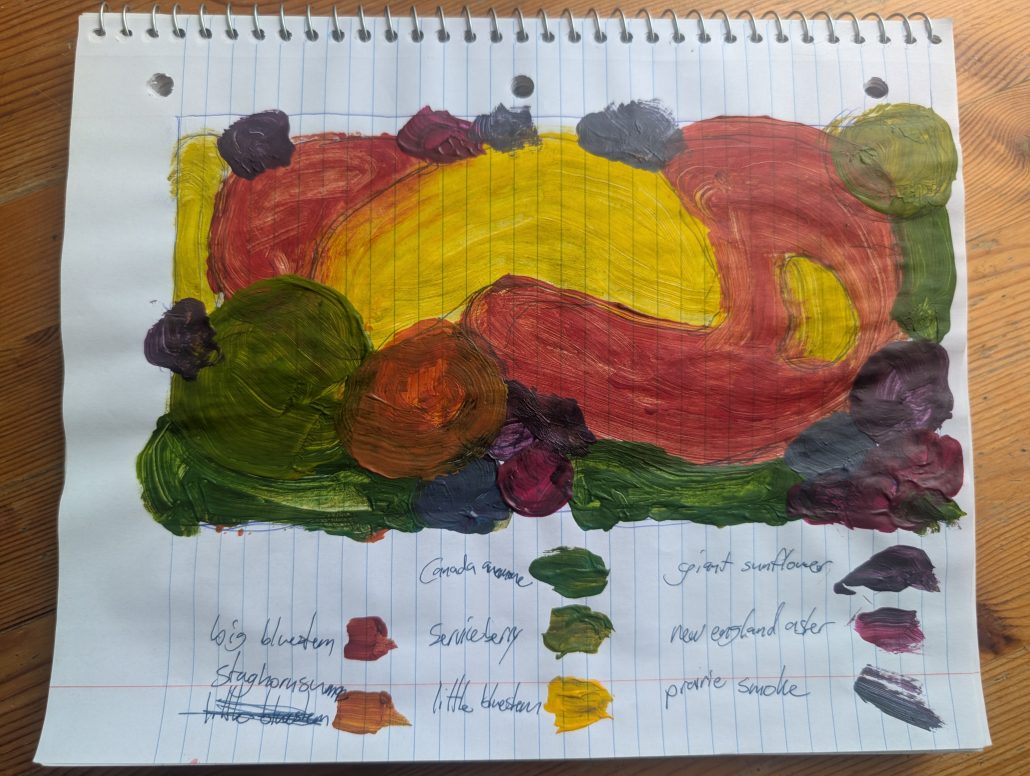
As I sit in my appartment and wait for it to snow again, I have a lot of free time to kill. Most of this free time ends up being wasted, but sometimes I go down a rabbit hole to learn something new in preparation for the planting season. So I started researching popular garden desigers and came accross the wonderful works of Piet Oudolf. His sprawling meadows of grasses and perennials truly resonated with me, and as I dove deeper it was fascinating to see how we were both drawn to these types of plants but for completely different reasons.
Piet Oudolf is a dutch garden designer known for his prairie plantings using lots of different grasses and perennials. He is a master of companion planting in a way that I don’t truly understand yet. He knows what plants work together to bring harmony to the scene he paints in his gardens. He sees plant varieties like a painter sees colors on a pallet. To get the right composition, he will use large groupings of the same plant. This gives the impression of bigger, healthier plants that all gardeners are after. Oudolf has many public installations all over the world, and now that I’ve discovered him, I am excited to go see his addition to the Toronto Botannical Garden.
The thing that struck me most about Oudolf’s garden design philosophy is the theme of birth, life, and death. He is famous for saying that brown is a color in reference to plants that turn brown in the winter. Some gardeners would think these are ugly and cut them down, but Piet Oudolf sees them as a crucial part of the story he tells through his plantings. Each year, the perennnials sprout from the earth in spring, they grow through the summer, and turn to seed before dying off in the winter. They are born, they live, and they die – just like us. But a plant goes through this cycle every single year. This means we can watch the cycle of our lives dozens of times within one lifetime.
In one interview, Piet was asked about the intentionality behind the ecological benefits of his gardens. This of course made sense to me as he uses so many perennial grasses. As far as I’ve seen, perennial grasses seem to be the most effective plants at sequestering carbon thanks to their deep, dense root structures. Add in some flowers, trees, and shrubs for biodiversity and you have a functioning mini-ecosystem. But he said that the intention behind his designs were purely aesthetic. To bring nature into the city. To give people a place where they can enjoy the beauties of nature. The ecological benefits of mimicking nature in this way were an unforseen bonus.
When I started this business, my focus was on doing landscaping differently than the companies I worked for. I wanted to design gardens that helped people lower their carbon footprint. In my research I came accross the benefits of perennials and grasses and have been using these wherever possible in my own plantings. Although we have different values and reasons for our choices, we both were drawn to these special plants. I am inspired by Piet Oudolf to become even better in my craft and one day create a garden half as beautiful as his. He says to “create something that you remind of nature, but it’s not nature at all.” The commical dutch grammar of this quote fails to take away from the beauty it conveys.